Druids
The Vampire LestatThe Druids are an ancient priesthood in Roman Gaul who identify Marius as the figure their god has chosen and prepare him for transformation at Samhain. Their rites give his change a communal and religious meaning: what becomes vampirism is, to them, the return of a god and the restoration of lost magic.
Identity and Historical Setting
Marius recognizes the group as Druids, members of the ancient priesthood of the Keltoi described in accounts of Caesar, and is struck by the apparent survival of an institution he believed no longer existed in Roman Gaul. He knows the conventional image of Druids in long white robes, collecting mistletoe from oak trees with ceremonial sickles, but the man who brought him to the group initially looked more like a farmer or soldier. Marius also understands that Druid practice is unlawful in the period he describes, helping explain why the priesthood does not present itself openly.
The group’s authority extends beyond ritual. Its members are described as priests, judges, and teachers, entrusted with the young, poetry, and laws that have never been written down. Their appearance in white robes and their shared presence establish a recognizable priestly order, while their role as keepers of unwritten knowledge suggests a community grounded in inherited oral tradition.
Selection and Samhain Rite
After Marius has been taken into their keeping, the man who brought him there returns in immaculate white robes with other tall, yellow-haired priests. The group surrounds Marius in silence before its eldest member declares him suited to the god and says that he must remain with them until Samhain. At the feast, they intend for him to drink the Divine Blood and become a father of gods, restoring the magic they believe has inexplicably departed from them.
Marius asks whether his body will die. The priest answers that only his mortal part will die, giving the coming transformation a theological explanation before it occurs. The language of selection and preparation frames the change not as an accidental encounter but as a rite with a designated candidate, a sacred occasion, and an anticipated new status.
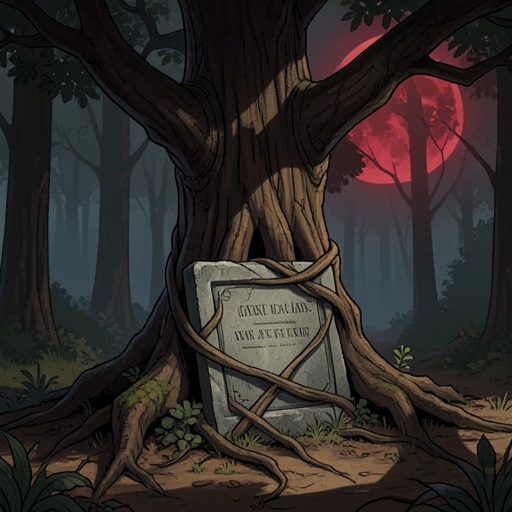
At the rite’s culmination, Marius emerges from an oak after his human death and calls on the Druids to open the door, presenting himself as the god they have awaited. He can now perceive what is in their hearts; he sees Mael’s relief that the god within him was strong enough to create him and recognizes the confirmation of Mael’s belief. The Druids’ response and Marius’s command to take him to the altars lead into the Feast of Samhain, where he is to be given the blood he needs.
Belief and Vampire Traditions
The Druids’ understanding of the transformation differs from the account of vampire initiation later given by the Parisian coven’s leader. That leader describes an old system in which candidates prove themselves through crimes, receive a small infusion of vampire blood, endure burial, and rise from a coffin as tested members of the Children of Darkness. He associates that tradition with rules of burial, darkness, and religious observance. The Druids, by contrast, interpret Marius’s change as divine blood and the making of a godlike restorer of magic.
The contrast presents vampirism not through a single, universally accepted religious framework, but through rival explanations and rites. The Druids’ account makes their practice an act of sacred selection and restoration; the Parisian coven’s account makes initiation a trial governed by inherited rules. The novel’s different communities thus attach distinct institutions and meanings to the passage from mortal life into the vampire condition.